
RECA sets and enforces standards of practice for Alberta’s real estate, mortgage brokerage, and property management industries. When these standards are not met, RECA investigates complaints and may issue discipline. RECA also investigates individuals or companies operating without a licence.
Who Can Submit Complaints
RECA reviews complaints from:
- Consumers
- Licensees
- Industry associations
- Financial institutions
- Law enforcement agencies
- Other regulatory bodies
- Any other source that may indicate a potential breach of RECA legislation
If you believe a licensee or an individual is not following the rules or is performing activities that require a licence, you can submit a written complaint to RECA.
Please complete the File a Complaint Form to submit your concern.
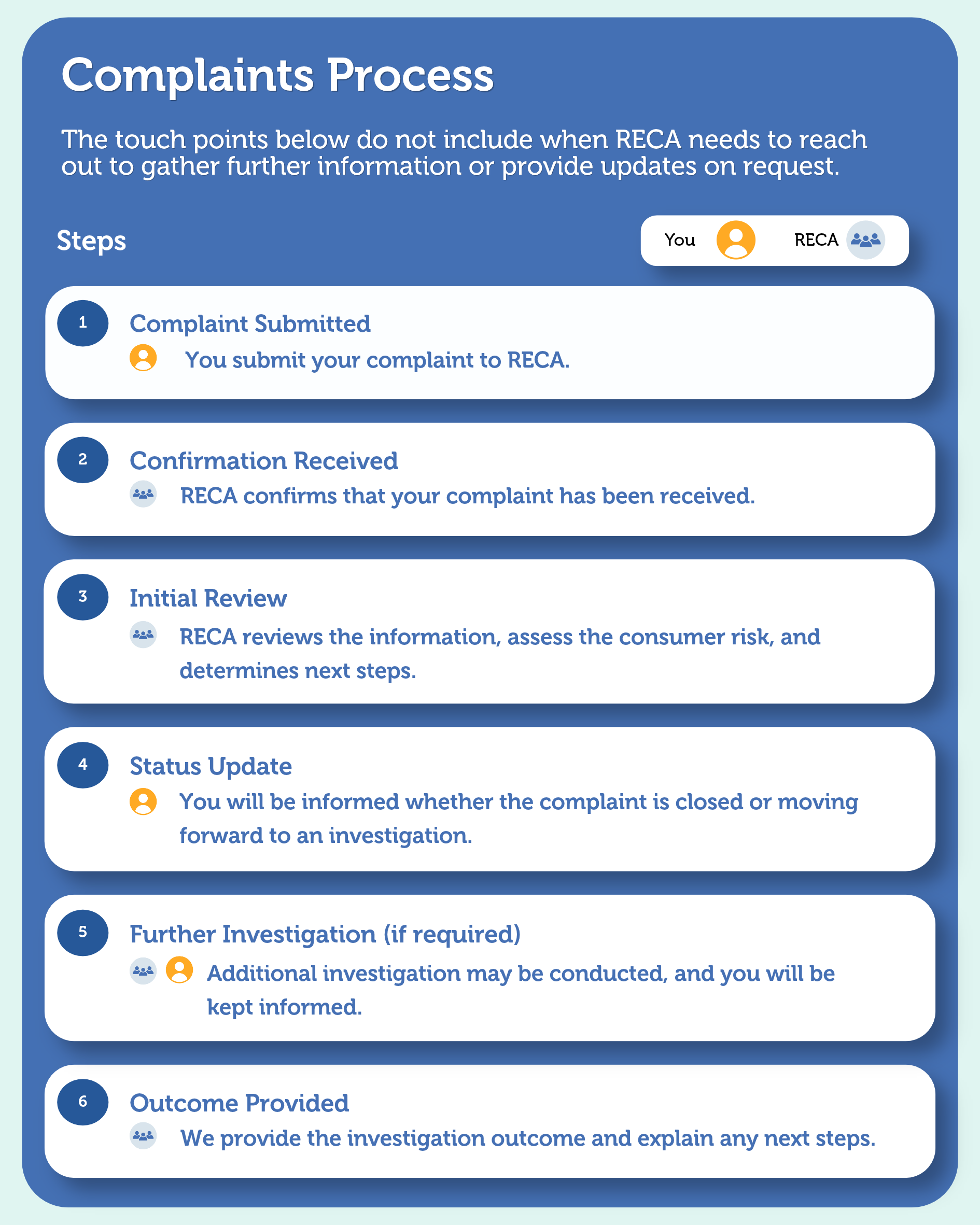
Under the Real Estate Act, RECA has the authority to hold formal hearings to inquire into possible licensee breaches of the Act and discipline misconduct when appropriate. There is also the possibility for issuance of letters of reprimand and/or administrative penalties.
RECA enforces the standards it sets through a transparent complaint handling and investigation process. It is committed to being consistent, proportionate, effective, transparent, and timely. As such, RECA is open to alternative complaint resolution outside of the formal complaint and disciplinary process.
Alternative Complaint Resolution (ACR) aims to resolve complaints involving minor issues while avoiding formal investigation outcomes. Where issues are minor, and the consumer has not been negatively impacted, RECA will favour an educational approach to address the issue. RECA understands many incidents that result in a breach of the legislation are one-time unintentional events with little impact on consumers. Rather than issuing discipline in these instances, RECA investigators will educate the licensee on the legislation, the licensee’s obligations, and how to prevent future issues from reoccurring.
Generally, a minor infraction means:
- consumer was not negatively impacted
- isolated issue
- not intentional; mistake was made
- issue can be corrected or mitigated
Voluntary Broker Resolution Process (VBR)
The Voluntary Broker Resolution Process (VBRP) is an ACR initiative where brokers play a key role in resolving the complaint. A successful VBRP avoids a formal investigation process and may resolve a complaint more quickly.
The Process
- all parties must agree to participate
- the industry professional’s broker will manage the process
- if VBRP resolves the complaint (i.e. all parties are satisfied), RECA will terminate the investigation
Guide to the Voluntary Broker Resolution Process for Brokers
Letters of reprimand are the least severe form of discipline. RECA typically issues letters of reprimand when there is evidence of conduct deserving of sanction, but the resulting breaches are technical or minor in nature. The Registrar or a Hearing Panel may issue letters of reprimand.
If the Registrar determines there is sufficient evidence of conduct deserving of sanction with respect to, typically, one or two straightforward issues, the Registrar may issue an administrative penalty. The administrative penalty will provide a general overview of the facts that led to the contravention of the legislation and include the amount of the penalty. Administrative penalty amounts are set out in Schedule 2 of the Bylaws made pursuant to the Real Estate Act.
See more information on appealing an Administrative Penalty and payment information.
RECA conducts disciplinary hearings with a three-person panel—comprised of licensees and public members—which investigates into whether a licensee’s conduct is deserving of sanction under the Real Estate Act.
At a hearing, a Hearing Panel considers evidence and makes its decision. The panel has the right to examine witnesses under oath and has many of the powers of the court for the trial of civil actions.
Hearing Panels attempt to issue their written decisions within 30 days of a hearing’s completion, though this is not always possible. RECA will notify, and provide a copy to, the licensees when they complete their written decision.
Hearing panel outcomes can include fines, costs, education requirements, terms or conditions on a licence, and/or suspensions.